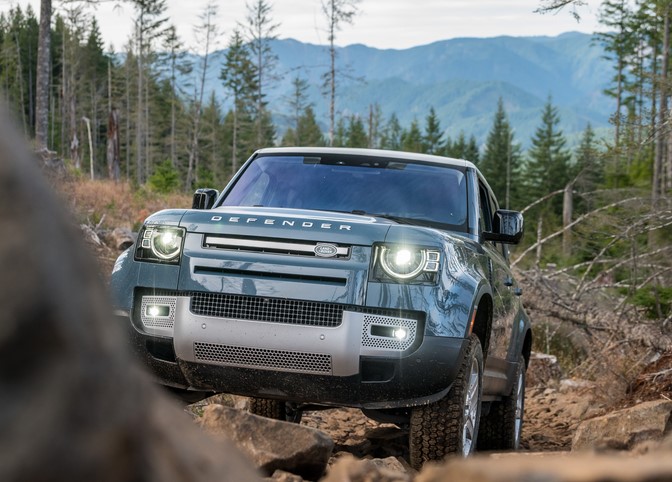
You’re staring at a steep, muddy incline that looks more like a waterfall than a trail. Your palms are sweating against the steering wheel, and the “mall crawler” behind you has already turned around in defeat. In that moment, the spec sheet in your glovebox doesn’t matter—only the mechanical soul of your vehicle does.
Over the last decade, I’ve piloted everything from bone-stock Jeeps in the red rocks of Moab to heavily modified Land Cruisers in the dense jungles of Southeast Asia. I’ve learned that a “great SUV” on the highway can be a dangerous liability once the pavement ends. Most people buy for the look, but true off-roaders buy for the geometry, the gearing, and the grip.
If you’re looking to invest in a vehicle that won’t leave you stranded when the GPS signal dies, you need to understand what makes the best off-road SUVs truly capable. Let’s dig into the dirt and find your perfect trail partner.
The Holy Trinity of Off-Road Capability
Before we look at the models, I need you to understand three terms. I call these the “Don’t-Get-Stuck” metrics.
-
Approach Angle: Imagine your SUV is a giant skateboard. This is the steepest incline you can climb without the front bumper hitting the ground.
-
Departure Angle: Same concept, but for the rear bumper when you’re coming off a rock.
-
Breakover Angle: The ability to crest a hill without “high-centering” (getting stuck on your belly like a stranded turtle).
Analogy: Think of off-roading like hiking in specialized boots. A standard SUV is like a fashionable sneaker—fine for the sidewalk. A true 4×4 is a heavy-duty timberland boot with deep lugs and ankle support. You can hike in sneakers, but you’re going to regret it when the terrain gets vertical.
The Heavyweights: Best Off-Road SUVs of 2026
1. The Undisputed King: Jeep Wrangler (JL Platform)
There is a reason the Wrangler remains the benchmark. It is one of the few remaining vehicles with Solid Front and Rear Axles.
-
Why it wins: Mechanical simplicity and extreme Articulation. Articulation is the ability of the suspension to keep all four tires on the ground even when the body is tilted.
-
The Rubicon Factor: If you’re a beginner, look for the Rubicon trim. It comes from the factory with Electronic Locking Differentials and a sway-bar disconnect. It’s basically “cheating” for off-roading.
2. The Tech-Forward Titan: Ford Bronco
The Bronco changed the game by proving that Independent Front Suspension (IFS) could actually handle the rough stuff.
-
The Experience: I find the Bronco much more “civilized” on the highway than the Jeep. It tracks straighter and doesn’t wander.
-
Sasquatch Package: This is Ford’s “Easy Button.” It gives you 35-inch tires and high-clearance fenders right out of the box. It’s perfect for the intermediate driver who wants capability without the headache of aftermarket tuning.
3. The Immortal Legend: Toyota 4Runner
The 4Runner is the “Old Reliable” of the group. While the tech might feel a bit dated compared to a Bronco, its reliability is legendary.
-
Personal Insight: In the middle of a desert, I’d rather be in a Toyota. Why? Because when things break 100 miles from civilization, you want a vehicle that has had the same basic mechanical DNA for 15 years. Parts are everywhere, and the Crawl Control system is like cruise control for rocks.
Understanding the “Guts”: 4WD vs. AWD
This is the most common mistake I see beginners make. They are not the same.
-
AWD (All-Wheel Drive): Great for rain and light snow. The computer decides where the power goes. It usually lacks a “Low Range.”
-
4WD (Four-Wheel Drive) with Transfer Case: This is what you need. It has a 4-Low setting.
-
Low Range is like having a “super-strength” mode. It multiplies the engine’s torque, allowing you to crawl over obstacles at 1 mph with immense power, rather than bouncing over them and breaking your suspension.
Technical Features to Look For (LSI Keywords)
When scanning the window sticker of the best off-road SUVs, keep an eye out for these technical vitals:
-
Body-on-Frame Construction: This means the vehicle is built like a truck, allowing it to handle the twisting forces (torsion) of off-roading without the doors popping open or the frame snapping.
-
Skid Plates: These are metal shields for the “soft bits” like your oil pan and fuel tank.
-
Two-Speed Transfer Case: Essential for shifting into 4-Lo.
-
Locking Differentials: This forces both wheels on an axle to turn at the same speed. Without this, the power will always go to the wheel that has no traction (the one spinning in the air).
Expert Advice: The 20% Rule
I’ve spent thousands of dollars on modifications, but here is a “Peringatan Tersembunyi” (Hidden Warning) for you: The most capable off-road upgrade is the one between the steering wheel and the seat.
Tips Pro: Before you spend $5,000 on a lift kit and 37-inch tires, spend $1,000 on a high-quality set of All-Terrain (A/T) or Mud-Terrain (M/T) tires and a recovery kit (traction boards and a kinetic rope). A stock SUV with great tires and a skilled driver will out-wheel a modified rig driven by a novice every single time.
Scannable Comparison Table: Which One for You?
| SUV Model | Best For… | Suspension Type | Reliability Score |
| Jeep Wrangler | Hardcore Rock Crawling | Solid Axle (Front/Rear) | Moderate |
| Ford Bronco | High-Speed Desert & Tech | IFS (Front) / Solid (Rear) | Moderate |
| Toyota 4Runner | Overlanding & Long Trips | IFS (Front) / Solid (Rear) | Exceptional |
| Land Rover Defender | Luxury + Incredible Tech | Full Independent (Air) | Complex |
Conclusion: Adventure is Calling
Choosing from the best off-road SUVs isn’t just about picking a car; it’s about picking the key to a world most people only see on Instagram. Whether you want the raw, doors-off freedom of a Wrangler, the high-tech prowess of a Bronco, or the “take me home” certainty of a 4Runner, make sure you choose a vehicle that matches your actual needs—not just your ego.
The trail is a great equalizer. It doesn’t care how much you paid for your rig; it only cares about your line choice and your equipment.
What’s your dream trail? Are you looking to tackle the muddy forests of the East Coast or the wide-open dunes of the West? Drop a comment below, and let’s talk about the best setup for your specific terrain!