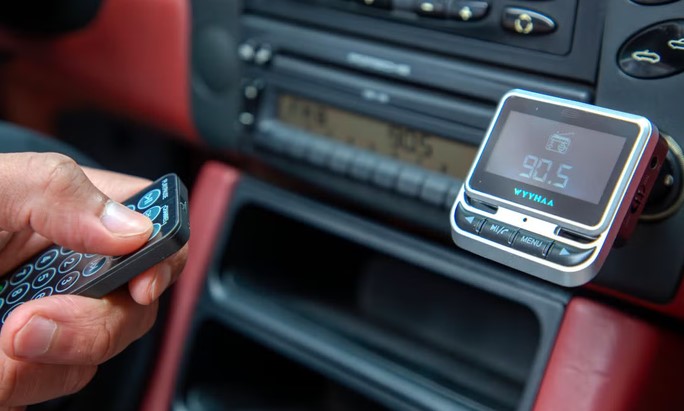
You step into your trusted daily driver—a solid 2005 sedan that still runs like a top—and get ready for a long commute. You want to stream your favorite playlist or podcast, but you’re met with a dated factory head unit, a CD player that skips, and zero Bluetooth connectivity. Installing an aftermarket touchscreen unit sounds great until you realize it means ripping apart your dashboard and spending upwards of $300 to $500.
In my decade-plus of working on cars and tweaking interior electronics, I’ve seen countless drivers face this exact dilemma. The good news? You don’t need to rewrite your dashboard’s wiring harness or spend a fortune to get seamless Bluetooth audio, hands-free calling, and fast phone charging in an older vehicle.
Finding the best FM transmitters for old cars gives you a plug-and-play solution that retrofits modern connectivity into any vehicle equipped with a 12V cigarette lighter socket and an FM radio. In this guide, we’ll break down how these clever devices work, what technical features to look for, and how to get crystal-clear sound without annoying static.
How an FM Transmitter Works: The Personal Radio Station Analogy
To understand how an FM transmitter bridges the gap between your smartphone and an old car stereo, think of the device as your own miniature, ultra-short-range radio broadcasting tower.
-
The Input: Your phone connects wirelessly to the transmitter via Bluetooth (or a 3.5mm AUX cable).
-
The Broadcast: The transmitter converts that digital audio signal into a low-power FM radio wave on an exact frequency you select (for example, 88.1 FM).
-
The Receiver: Your car’s factory antenna picks up that short-range broadcast just like a commercial radio station and plays it through your speakers.
┌─────────────────┐       Bluetooth       ┌─────────────────┐       FM Radio       ┌─────────────────┐
│   Smartphone    │  ─────────────────►   │  FM Transmitter │  ─────────────────►  │ Car Stereo Head │
│ (Music / Calls) │   Wireless Audio      │  (12V Socket)   │   Low-Power Wave │     Unit        │
└─────────────────┘                       └─────────────────┘                      └─────────────────┘
Because the broadcast power is intentionally low (to comply with FCC regulations), it only reaches a few feet—just enough to cover the distance between your center console and your car’s radio antenna.
What Features to Look For in the Best FM Transmitters
Not all transmitters are created equal. Older or cheap models often suffer from muddy audio, weak signal output, and constant static. When hunting for the best FM transmitters for old cars, prioritize these crucial technical specs:
1. Modern Bluetooth Standard (Bluetooth 5.0 or Higher)
Older Bluetooth 3.0 or 4.0 models suffer from high audio compression, noticeable signal latency, and frequent disconnections. Look for devices featuring Bluetooth 5.0 to 5.3, which offer wider bandwidth, lower power consumption, and significantly cleaner audio transmission.
2. Fast Charging Ports (USB-C Power Delivery & QC 3.0)
Since the device occupies your 12V cigarette lighter socket, it needs to double as a capable charger. Look for models featuring at least one USB-C PD (Power Delivery) port rated at 18W–30W alongside standard USB-A Quick Charge ports so your phone stays powered during long road trips.
3. Active Noise-Canceling (ANC) Microphones
If you plan to take hands-free calls while driving, built-in microphone quality is vital. Top-tier transmitters incorporate CVC (Clear Voice Capture) or active background noise suppression to filter out cabin engine hum, road noise, and climate fan blowing.
4. Dedicated EQ & Bass Boost Controls
Because factory car stereos in older models often lack granular equalizer settings, having a dedicated physical “Bass Boost” button or dial directly on the transmitter allows you to quickly adjust sound profiles without taking your eyes off the road.
Top Recommended FM Transmitter Categories for 2026
While exact brand preference varies depending on your dashboard layout, most high-performing transmitters fall into three distinct physical design types:
+-----------------------------------------------------------------------------------------------+
|                                 TRANSMITTER FORM FACTORS                                     |
+---------------------+-----------------------------------+-------------------------------------+
| Style               | Best For                          | Key Advantage                       |
+---------------------+-----------------------------------+-------------------------------------+
| Compact Plug-In     | Recessed or tight console sockets | Low profile; sleek look             |
| Extended Gooseneck  | Sockets hidden low near floorboards| Brings controls closer to hands     |
| Dashboard Mounted   | Vertical dash integration         | Keeps screen and controls eye-level |
+---------------------+-----------------------------------+-------------------------------------+
-
Compact Direct Plug-In (e.g., Anker Roav, Nulaxy KM18): These sit flush inside your 12V port. They are clean, unobtrusive, and ideal for cars where the cigarette lighter is located near the climate controls.
-
Flexible Gooseneck Designs: Featuring a flexible arm, these allow you to bend and pivot the display screen toward the driver’s seat. They are a lifesaver if your 12V port is buried deep in an armrest storage box or low near the cupholders.
-
Dashboard Mount / Air Vent Clip-On: These separate the control unit from the 12V plug using a thin wire, allowing you to mount the buttons and microphone right on your air vent or dash trim for safer, eye-level operation.
Step-by-Step Setup: How to Eliminate Radio Static
The single biggest complaint drivers have with FM transmitters is background static. As you drive through different towns, commercial radio stations bleed onto your chosen frequency. Follow this simple calibration method to get static-free playback:
-
Unplug the Transmitter First: Before turning on the device, turn on your car’s radio.
-
Find an “Unoccupied” Frequency: Manually scan your FM dial to find a frequency where you hear pure, uniform static with no background music or voice bleed.
-
Choose the Edges of the FM Band: In most metropolitan areas, frequencies at the extreme bottom (such as 87.9 MHz, 88.1 MHz, or 88.3 MHz) or top (107.7 MHz, 107.9 MHz) are left open for public or low-power broadcasting.
-
Match the Transmitter: Plug in your transmitter and set its digital display to match the exact vacant frequency you selected on your car radio.
-
Adjust Volume Gains: Set your smartphone volume to roughly 80% to 90%, and use your car stereo’s master volume knob for final adjustments. Over-amplifying phone volume can cause signal distortion, while setting it too low forces the car stereo to amplify background floor noise.
Summary: Upgrading Your Old Car Audio System
| Upgrade Path | Cost | Installation Effort | Audio Quality | Key Features |
| Bluetooth FM Transmitter | $15 – $35 | Zero (Plug & Play) | Good / Solid | Hands-free calls, USB charging, fast setup |
| 3.5mm AUX Bluetooth Receiver | $15 – $30 | Minimal | Very High | Direct wire input (requires AUX port on stereo) |
| Aftermarket Head Unit | $150 – $500+ | High (Wiring required) | Excellent | Touchscreen, Apple CarPlay / Android Auto |
Pro Tip & Hidden Warning for Old Car Owners
💡 Pro Tip: Leverage the “Vacant Frequency Finder”
If you live in a dense city with crowded radio airwaves, finding an empty frequency manually can be frustrating. Use online tools like Radio-Locator’s Vacant Frequency Finder (or your transmitter’s auto-scan button if equipped). Entering your zip code reveals the exact unused FM frequencies in your immediate area.
⚠️ Beware of Continuous 12V Battery Drain
In many classic vehicles and older European models (such as older BMWs, Voltswagens, or Audis), the 12V cigarette lighter socket remains permanently powered, even when the ignition key is removed and the engine is off. If your car keeps the socket active, leaving an FM transmitter plugged in overnight can slowly drain your vehicle’s 12-volt starter battery. Always check if your device’s LED screen stays lit after turning off the car, or simply unplug it when parking for extended periods.
Final Thoughts: Enjoying Modern Tech in a Classic Drive
Upgrading your daily commute doesn’t require taking on debt or performing complex mechanical overhauls. Installing one of the best FM transmitters for old cars gives your trusted vehicle an instant technological boost—bringing high-definition music streaming, hands-free safety, and rapid device charging to your dashboard in less than two minutes.
What year and model is your current daily driver? Have you used an FM transmitter before, or are you looking to replace an old cassette adapter setup? Drop your thoughts and questions in the comments below!