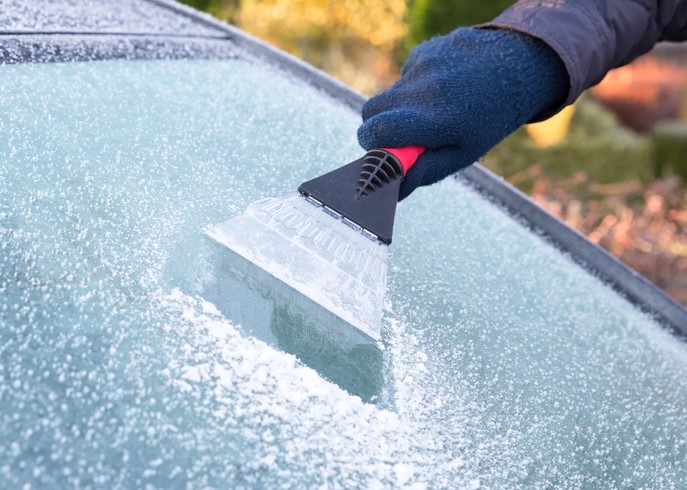
 You walk out your front door running late for work, coffee spilling over your travel mug, only to find your windshield coated in a stubborn layer of thick frost or rendered totally opaque by a wall of heavy internal fog. You jump into the driver’s seat, crank the heater on high, and watch in frustration as nothing happens for five straight minutes while precious time slips away.
In my 10-plus years inside automotive repair bays, testing HVAC heater cores, and driving in brutal winter conditions, I’ve watched drivers make the exact same mistakes every single winter. Scraping relentlessly with a credit card or dumping hot water on glass aren’t just inefficient—they can cause permanent, multi-hundred-dollar damage to your vehicle.
Learning how to defrost car windows quickly isn’t about luck or waiting endlessly for your engine to warm up; it comes down to basic atmospheric physics and knowing how to manipulate your vehicle’s climate controls correctly. In this deep dive, we’ll break down the science of windshield defrosting, the ultimate step-by-step formula for instant clarity, and the costly mistakes you must avoid.
The Science of Fog and Frost: Why Windows Fog Up
Before pulling your climate control knobs, you need to understand where that fog or ice comes from. Moisture on your glass is governed by a single principle: the dew point.
The Cold Soda Can Analogy
To understand why moisture clings to your windshield, imagine sitting on a porch on a humid summer afternoon with an ice-cold can of soda:
-
The Soda Can: Water droplets instantly form on the outside of the cold aluminum because the humid air around it cools down rapidly, forcing moisture out of the air and turning it into liquid water.
-
Your Car Windshield: In winter, your windshield acts just like that cold soda can. When the warm, moist air from your breath and damp shoes hits the ice-cold glass, it instantly condenses into micro-droplets of water on the inside—or freezes into frost on the outside.
+-----------------------------------------------------------------------+
|                    WINDSHIELD CONDENSATION DYNAMICS                   |
+---------------------+-------------------+-----------------------------+
| Location            | Primary Cause     | Best Solution Method        |
+---------------------+-------------------+-----------------------------+
| Inside Glass Fog    | High interior     | Engage A/C compressor +     |
|                     | humidity & breath | fresh outside air intake    |
| Outside Glass Frost | Sub-freezing ambient| High heat to glass +        |
|                     | surface temp      | physical scraping / de-icer |
+---------------------+-------------------+-----------------------------+
The Ultimate 4-Step Formula to Defrost Car Windows Quickly
If you want to clear your windshield in half the time of standard heating alone, follow this scientifically proven sequence as soon as you start your engine.
Step 1: Turn Your Heater On Maximum Heat
Set your temperature dial to the highest setting available. Warmer air holds significantly more moisture than cold air. By flooding the cabin with hot air, you increase its capacity to absorb the trapped condensation sitting on the interior side of the windshield.
Step 2: Switch On Your Air Conditioning (A/C) Button
This is where most drivers get confused. Why turn on the A/C when you want heat?
Your car’s A/C system acts as a powerful dehumidifier. Running the A/C compressor strips moisture out of the incoming air stream before blowing it onto the glass, acting like a giant sponge that dries the cabin atmosphere rapidly.
Step 3: Turn OFF Air Recirculation (Select Fresh Air)
Look at your dashboard for the button with a picture of a car containing a circular loop arrow. Turn it off.
Leaving recirculation ON traps the humid air created by your breath, wet coat, and snowy boots inside the cabin, continuously blowing wet air back onto the glass. Selecting Fresh Outside Air pulls in drier external air, accelerating the moisture evaporation process.
Step 4: Crack the Windows Slightly
Opening your side windows just half an inch allows the warm, moisture-laden air being displaced by the heater to escape out of the cabin, replaced instantly by drier outside air.
[Start Engine] ──► [Max Heat] ──► [Turn A/C ON] ──► [Recirculation OFF] ──► [Crack Windows 1/2"]
DIY De-Icer Spray: The Fast-Track Formula for Outside Ice
When dealing with a thick layer of exterior frost or sheet ice, waiting for the heater core to warm up can feel like an eternity. Having mixed up dozens of winter solutions in the shop, I recommend keeping a simple spray bottle of DIY Isopropyl De-Icer in your trunk.
The 2:1 Rubbing Alcohol Mix
-
Ingredients: 2 parts 70% Isopropyl (rubbing) Alcohol to 1 part water, plus 2 drops of standard dish soap.
-
Why It Works: Isopropyl alcohol has a freezing point of roughly -128°F (-89°C). When sprayed directly onto frosted glass, it instantly lowers the freezing point of the ice, melting thick frost in 15 to 30 seconds without damaging your rubber wiper blades or exterior automotive paint.
Expert Advice: Pro Tips & Hidden Warnings
As someone who has replaced shattered windshields and repaired burnt-out HVAC blower motors, here are two critical factors you must keep in mind during extreme cold spells:
💡 Pro Tip: Prevent Fog Before It Starts with Isopropyl Cleaning
Interior windshield fog clings directly to microscopic dust, oil, and smoke film sitting on the inside of your glass. Clean the inside of your windshield thoroughly using a microfiber towel and rubbing alcohol once every few weeks. A squeaky-clean glass surface gives condensation fewer places to bind, drastically cutting down morning defrost times.
⚠️ NEVER Pour Hot Water on a Frozen Windshield
Every winter, I see drivers ruin their morning by pouring a kettle of hot water onto a frozen windshield to melt ice quickly.
Glass expands rapidly when heated. Subjecting freezing glass to boiling or warm water creates massive thermal shock, resulting in immediate structural cracking across the entire windshield. A minor rock chip you didn’t even notice will instantly turn into a spiderweb crack requiring full glass replacement!
Clearing the Way for Safe Winter Driving
Knowing how to defrost car windows quickly is more than just a convenience; it is a critical safety practice. Driving with small “portholes” scraped through the ice restricts your peripheral vision, making accidents dramatically more likely during hazardous winter conditions.
By pairing max heat with your A/C dehumidifier, turning off air recirculation, and using a simple alcohol-based de-icer spray, you can transform a frustrating 15-minute winter hassle into a quick, stress-free routine.
What is your go-to routine for clearing frozen windows on a cold morning? Have you tried the A/C dehumidification trick yet? Let me know in the comments below, and stay safe on the roads this winter!