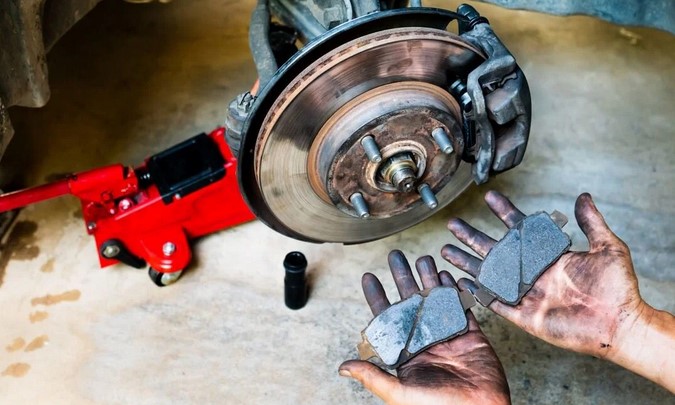
 That high-pitched, metallic screeching sound as you pull up to a red light isn’t just an embarrassing social faux pas—it’s your car screaming for help. In my fifteen years under the hood, I’ve seen everything from perfectly maintained Brembos to rotors that looked like they’d been chewed on by a mechanical shark.
The most terrifying thing? Many drivers ignore that sound until the pedal feels like a sponge and their stopping distance triples. Your brakes are the most critical safety system on your vehicle; they are the only thing standing between a controlled stop and a very expensive insurance claim.
In this deep dive, I’m going to pull back the curtain on brake pad replacement. I’ll show you how to tell when your pads are “cooked” and guide you through the process of swapping them out yourself. Trust me, once you realize how simple this is, you’ll never pay a shop $400 for a “standard brake service” again.
The Anatomy of Stopping: How Brakes Actually Work
Think of your braking system like a bicycle handbrake, but on steroids. When you push the pedal, hydraulic fluid (Brake Fluid) travels through lines to a Caliper.
The caliper acts like a giant clamp. Inside that clamp are your brake pads. When the pressure hits, the caliper squeezes those pads against a heavy metal disc called the Rotor (or Disc).
The friction between the pad and the rotor is what stops the car. This friction generates massive amounts of heat—sometimes upwards of 500°C during heavy mountain driving. Over time, that friction material literally grinds away into dust, which is why your wheels get that dark, grimy coating.
When to Pull the Trigger: Signs You Need Brake Pad Replacement
I’ve had customers swear their brakes were “fine” only for me to find the pads worn down to the backing plate (metal-on-metal). Don’t wait for the sparks. Watch for these red flags:
1. The Acoustic Warning (The Squealer)
Most modern pads have a small metal tab called a wear indicator. When the friction material gets dangerously thin, this tab touches the rotor and creates that infamous high-pitched chirp. It’s a built-in alarm clock telling you it’s time to wake up.
2. The Steering Wheel Shudder
If your steering wheel vibrates or pulses when you apply the brakes, your rotors might be warped or have uneven pad deposits. While this usually means you need new rotors, it’s a sign that your pads haven’t been doing their job effectively.
3. Visual Inspection (The 1/4 Inch Rule)
If you have alloy wheels with wide gaps, you can often see the pads without taking the wheel off.
-
Look at the pad thickness: If the friction material is less than 3mm (about 1/8 to 1/4 inch), you are in the danger zone.
4. The Spongy Pedal
If the brake pedal feels “soft” or goes almost to the floor before the car slows down, you likely have air in your lines or severely worn pads that are forcing the caliper pistons to overextend.
Choosing Your Material: Organic, Semi-Metallic, or Ceramic?
Not all pads are created equal. In my shop, I always ask the owner: “How do you drive?”
-
Organic (NAO): Made from fibers like glass, rubber, and carbon. They are quiet and soft, but they wear out fast and create a lot of dust. Best for light city commuting.
-
Semi-Metallic: The “working man’s” pad. They contain 30-65% metal. They have incredible stopping power and handle heat well, but they can be noisy and are “aggressive” on your rotors.
-
Ceramic: The gold standard for daily drivers. They are incredibly quiet, produce almost no visible dust, and last a long time. However, they aren’t ideal for extreme racing or heavy towing.
Step-by-Step Guide to Brake Pad Replacement
If you can change a tire, you can likely change your brake pads. Here is the workflow I use every day.
Preparation and Tools
You will need:
-
A floor jack and jack stands (Never work on a car supported only by a jack!)
-
A lug wrench
-
A basic socket set (usually 12mm to 14mm for calipers)
-
A C-clamp or a brake piston tool
-
Brake cleaner and high-temp brake grease
Step 1: Secure the Vehicle
Loosen the lug nuts while the car is on the ground. Jack it up, secure it on jack stands, and remove the wheel.
Step 2: Open the Caliper
Locate the two bolts holding the caliper to the bracket. Usually, you only need to remove the bottom bolt and loosen the top one to “swing” the caliper up.
Pro Tip: Never let the caliper hang by the rubber brake hose. It will damage the internal lining. Use a bungee cord or a coat hanger to zip-tie it to the suspension spring.
Step 3: Out with the Old
Pop the old pads out. Take note of how the anti-rattle clips are positioned. If your new pads came with new clips (and they should), pull the old ones off and snap the new ones in.
Step 4: Retract the Piston
As your pads wear down, the caliper piston stays pushed out. To fit fat, new pads in, you have to push that piston back.
-
Place an old brake pad over the piston.
-
Use your C-clamp to slowly squeeze the piston back into the caliper housing.
-
Warning: Keep an eye on your brake fluid reservoir under the hood. Pushing the piston back forces fluid back up, and it might overflow.
Step 5: Grease and Install
Apply a thin layer of high-temp brake grease to the back of the new pads where they touch the caliper.
-
DO NOT get grease on the front (friction) side of the pad or the rotor.
-
Slide the new pads into the clips.
Step 6: Reassemble
Swing the caliper back down over the new pads. Re-insert the bolts and tighten them to the manufacturer’s torque specs (usually around 25-35 ft-lbs for small cars). Put the wheel back on and lower the car.
Expert Advice: The “Bedding-In” Process
The biggest mistake beginners make is finishing the job and immediately flying down the highway.
The Secret “Hidden” Step: Before you even put the car in gear, pump the brake pedal 5-10 times while the engine is running. The first few pumps will go to the floor—this is normal as the piston moves out to meet the new pads.
Once the pedal feels firm, you need to “Bed-In” or “Burnish” the pads. Drive to a quiet road and perform 5 or 6 moderate stops from 40 mph down to 10 mph. This transfers a thin layer of pad material onto the rotor, ensuring a smooth, noise-free stop for the rest of the pad’s life.
Conclusion: Take Charge of Your Safety
Replacing your own brake pads is a rite of passage for any DIY mechanic. It builds a deeper connection with your machine and ensures that the most vital safety component on your car is handled with care—not just rushed through by a “lube tech” at a franchise shop.
Remember, if you encounter heavy rust, leaking fluid, or a piston that refuses to move, don’t be afraid to call in a professional. There is no shame in seeking help when it comes to stopping power.
Are you planning to tackle your brakes this weekend, or do you have a horror story about a “squeal” that wouldn’t go away? Share your thoughts in the comments below—I’d love to hear about your garage wins and challenges!